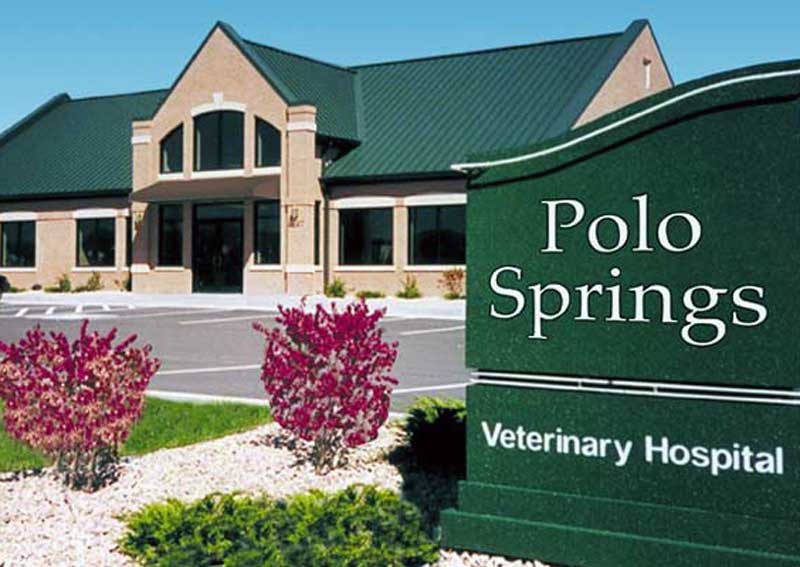
Polo Springs Veterinary Hospital
September 4, 2010
THANKS
I just wanted to say thanks for a wonderful first trip for my two puppies to the vet! I found your facility to be very professional and well laid out. We also received our welcome letter today. It was so nice to see how professional and responsive your team is there! Keep up the good work!
Rachel and Paul F.
LATEST NEWS

Ask a Doctor

Do you have a question you'd like answered by one of our experienced veterinarians? If, so, email us your question and check back here for your answer!

What should I do if I think my dog might have heat stroke?

Early recognition of heat stroke is extremely important. Signs of heat stroke can include some or all of the following: extreme panting or difficulty breathing, increased salivation, a temperature of 106 F or greater (a normal temperature is up to 102.5 F), deep pink gums, a fast heart rate, vomiting or defecating blood, muscle tremors, seizures, or difficulty walking, and coma. Heat stroke is usually caused by excessive exercise in hot and/or humid conditions, but can also be caused by enclosure in an unventilated room, car or grooming dryer cage, or a lack of water intake. Animals with short snouts, such as pugs, or animals with underlying diseases of the heart or airway can develop heat stroke more easily. Overweight animals and those with a very heavy hair coat are also at higher risk of developing heat stroke. If you suspect heat stroke in your pet, you should notify a veterinarian immediately. Prior to transporting your pet to the veterinarian, you should begin trying cooling measures. This is done by spraying the pet with water or immersing in water prior to transport. Always avoid ice, which can constrict blood vessels and slow the cooling process, especially if the pet shivers. Your veterinarian will provide further cooling measures and any necessary supportive care. Most heat stroke patients need hospitalization with intensive care for several days. Heat stroke can affect all body systems, causing death, so early recognition and treatment is key to survival. Pets that experience an episode of heat stroke are predisposed to additional episodes, so prevention is also important. To prevent heat stroke, have plenty of fresh water for your pet at all times, do not leave pets in the car on hot days, and avoid exercise during the hotter times of day. Heavily coated dogs that stay outside during the day should also have shade and a baby pool of cool water in which to stand.

I just noticed a new lump on my pet, what should I do?

It is not advisable to just monitor the lump for changes without having it examined by a veterinarian. If you see a new lump or skin growth, schedule an appointment with your veterinarian as soon as possible. There are many different types of lumps, or masses. Some masses can be cancerous and it is not possible to tell if it is cancerous by just looking at it or feeling it. Your veterinarian can perform a simple test called a fine needle aspirate that can be completed during your appointment. This is done by using a very small needle to take some cells from the mass. These cells can be examined under the microscope to determine if the mass appears cancerous. This information is essential to determining the appropriate treatment for your pet and can save your pet's life.

My veterinarian said my pet is overweight and needs a special prescription diet obtained only through a veterinarian. Why can?t I just feed less of my pet?s current food?

Feeding less of your pet's current food can be beneficial only if your veterinarian has determined your pet is being over fed, such as with free choice feeding. When you feed less of the pet?s regular diet, not only are you reducing the calories, but also essential nutrients the pet needs to stay healthy. Regular foods are not designed for weight loss. By restricting the calories to the level needed for weight loss, the pet is deprived of the appropriate amounts of protein, vitamins and minerals. Many over the counter reduced calorie diets are not effective at weight loss either. Most of these foods still contain too many calories to meet the weight loss goal. Prescription diet foods use the most cutting edge research to achieve the appropriate weight loss while providing excellent nutrition and satiety (fullness) so your pet is not begging for food all the time. A prescription diet's formulation is strictly regulated (similar to a pharmaceutical) and guaranteed by the manufacturer, so you can feel confident that you're providing optimum nutrition while helping your pet achieve a healthy weight.

Why do I need to keep my indoor only cat vaccinated?

There are a variety of reasons to vaccinate indoor cats. The AAHA (American Animal Hospital Association) vaccination guidelines recommend vaccinating all cats with the core vaccinations (Rabies and FVRCP). Even if your cat never goes outside, he/she could be exposed to respiratory infections through the air if there are any neighborhood or stray cats that come near open windows or doors. If your pet ever slips out the door, it is best that he/she is protected. Also, if you ever plan on getting a new pet, it is best that your current pet be protected from diseases the new pet might carry. Rabies is a human health hazard that could be transmitted from your pet to your family if your pet is not vaccinated against this disease. Colorado law requires that all dogs and cats be current on their rabies vaccination. There are always new situations that can arise, and it is better to know that your best friend is protected.

How often should I bathe my pet?

If your pet is healthy and does not have any skin problems, it is best to avoid bathing your pet more than every 4 weeks. Due to our very dry climate, frequent bathing can dry out the skin and coat. Your veterinarian can recommend a good moisturizing pet shampoo and conditioner. You certainly want to keep your pet clean, so sometimes an extra bath is warranted. Otherwise daily brushing can keep the skin and coat healthy between baths.

Why is my cat urinating outside the litter box?

Many cats will urinate outside the litter box for behavioral reasons. Cats are very sensitive to any changes in their home environment and will urinate and/or defecate outside the box in response to stress. Figuring out the cat's particular stressors and excellent litter box management can often help the problem. However, it is best to have a veterinarian examine your cat to rule-out other causes of inappropriate urinations. Cats will also urinate outside their box due to diseases such as urinary tract infections, feline idiopathic cystitis (a sterile inflammatory disease of the urinary bladder), kidney disease, or bladder stones. If your cat is urinating or defecating outside the litter box, he/she should be examined by a veterinarian to check for any underlying diseases and to formulate a treatment plan to resolve the problem.

My puppy's stool looks normal. Is it still necessary to test him for intestinal parasite?

Yes! Intestinal parasites are extremely common in puppies and kittens. Many affected animals will not show signs of illness, however those severely infested may exhibit vomiting, diarrhea, weight loss, and a loss of appetite. In extreme circumstances, such infections can be fatal. Furthermore, some types of intestinal parasites can be transmitted to humans. Children are most at risk for acquiring these infections. Roundworms can migrate through internal organs in the body and even cause blindness or permanent nerve damage. Hookworms typically stay within the skin causing inflammatory reactions. To prevent such infections we recommend checking a fecal sample on all new puppies and kittens. This is then repeated on an annual basis throughout the pet?s life. In addition, we offer a broad-spectrum deworming agent to new pets and prescribe monthly heartworm prevention. Interceptor not only prevents heartworm disease, but also contains medication effective against hookworm, roundworm, and whipworm infections.

Is it ok to give my pet human food?

As a general rule, human food should be avoided in pets. A well balanced pet food, one that complies with nutritional standards established by AAFCO (Association of American Feed Control Officials) will supply all of their nutritional needs. Human food contains unnecessary calories making pets prone to obesity. For example, a 1 oz piece of cheese given to a 20 lb dog is roughly equivalent to a human consuming 2.5 hamburgers. In addition, human foods can be high in fat and sugar which can predispose animals to the potentially life threatening condition of pancreatitis.

My pet has been diagnosed as overweight. Is this really a problem?

Approximately 30% of pets in the United States are overweight or obese. This is a serious problem with significant health impacts. Lean dogs live an average 2 years longer, have a decreased risk of osteoarthritis, and are reported to have healthier blood sugar levels, blood pressures and heart rates. Obesity can also contribute to decreased lung expansion and increased work during breathing, both of which can result in exercise intolerance. Obesity can exacerbate underlying conditions such a collapsing trachea and predispose animals to heat stroke. If your pet is facing a weight problem let us help with our comprehensive weight management program. This plan includes laboratory testing, a prescription diet, and complimentary weigh-ins and feeding guides.

My dog seems to be in pain. Is it ok to give a human pain reliever?

If you have a pet that seems to be experiencing discomfort, it is best to have it evaluated by a veterinary professional. Over-the-counter human products, or even those marketed for animals, are not always safe for your pet and may even be hazardous. Pain relievers such as ibuprofen (Advil, Motrin) or acetaminophen (Tylenol) can actually be toxic to dogs and cats. Aspirin can cause serious gastrointestinal side effects and cannot be given concurrently with many veterinary medications. If a pet has been given aspirin it greatly limits the approved veterinary drugs that can be used safely on your pet to treat specific medical conditions. So please do not give your pet over-the-counter medications without discussing it with your veterinarian.

I have a female dog and her urine seems to create dead spots in my lawn. What can I do?

There are oral products for sale at many pet stores that are marketed to acidify your pet?s urine and in turn save your lawn. However, these products do not address the entire problem as to why canine urine can kill grass and they can have some potentially serious side effects. It is not only the pH of urine, but also the ammonia concentration that is responsible for harming the lawn. So changing the acidity of the pet?s urine will not completely solve the problem. In fact, it can actually be harmful to your pet. It can predispose her to bladder stones or be particularly damaging if she has underlying liver, kidney or pancreatic disease.

Females tend to have more concentrated urine than male dogs and they squat lower to the ground to urinate. This causes the damage you are seeing to your lawn. In an attempt to remedy this situation, encourage your pet to drink as much water as possible to dilute her urine. You can also pour water on the yard immediately after she has urinated to help wash it away.

My dog has been scooting his hindquarters along the carpet. Is something bothering him?

Dogs (and cats) have small sacs, typically referred to as anal glands, located within the tissue just outside of the anus. These glands are expressed normally as the pet defecates. Occasionally, the sacs do not express appropriately causing your pet discomfort. The anal glands can simply become overly full or they can even get infected. If the later is the case, the gland is in danger of forming an abscess and rupturing. It is best to have your veterinarian perform a thorough physical exam to fully assess the problem. Your pet may require regular anal gland expressions. You may request an appointment at Polo Springs Veterinary Hospital in order to have your pet?s anal glands expressed and the contents evaluated for infection. Routine anal gland expression is also included in all professional baths or grooms at Polo Springs Veterinary Hospital.

My cat does not allow me to brush her teeth. Is there anything else I can do at home to promote oral health?

Not all animals readily accept tooth brushing. If it is not feasible, there are some alternatives to consider. Dental chews are helpful in reducing plaque and loosening tartar. There is also a prescription dental diet for cats (and dogs) available from Royal Canin. It controls tartar by actually binding salivary calcium and thereby making it unavailable for tartar formation. In addition, the texture and shape of the kibble is designed to have a gentle abrasive effect on the teeth during chewing. Finally, it is important to remember the importance of a professional dental cleaning at the veterinary clinic.

My family is adopting a new puppy. Any tips on housetraining?

Congratulations! A new puppy is an exciting addition to the family. Housetraining takes time and patience. Start by setting a designated ?potty? area and consistently take the puppy there each time. Pick a cue such as ?go potty? or ?do your business? and use it each time the puppy is taken outside. When the puppy eliminates give lots of praise. If a food reward is going to be used, give if immediately after the puppy goes. Make sure every member of the family is familiar with the routine.

A puppy will need to be taken outside first thing in the morning and possibly throughout the night when it is very young. Twenty to thirty minutes after a meal the puppy should have to defecate. Play time and immediately after naps are other common times the puppy will need to be taken outside. Taking the puppy out frequently will help to prevent accidents.

If an accident does occur, never physically punish the puppy. If you catch him in the act, quickly get the puppy outside with the idea he will finish going outside. Then be sure to give lots of praise. Carefully clean the carpet where any accidents occur. Use a product marketed for pets to neutralize any odor. This will prevent the puppy from returning to a particular area in the house. Good luck!

My adult cat receives his vaccines every three years. I do not understand why I am being sent reminder postcards for a comprehensive exam when the vaccines are not yet due.

Even if your pet is not due for vaccines, an annual physical exam is still very important. This allows the doctor to do a thorough examination on your cat and possibly detect any underlying problems that you might not be aware of yet. It is also important to monitor fecal samples for intestinal parasites, some of which are transmissible to humans. Annual blood work and urine testing is essential to evaluate the total wellbeing of your pet. Furthermore, this is an ideal time to discuss any questions or concerns you may have with the doctor.

My older cat was just diagnosed with chronic kidney disease. Why is changing his diet necessary?

Dietary management can play a very important role in the lives of cats with kidney disease. A prescription kidney diet contains restricted levels of protein. A low protein diet helps decrease waste products the kidneys need to excrete. The diet is also low in phosphorous. Cats with kidneys that are not working properly tend to have a build up of phosphorous in their bloodstream, which can lead to serious consequences. The diet is also high in calories. Fat aids in making the diet more palatable, as cats can be selective eaters when they are not feeling well. A prescription kidney diet can be essential in controlling your pet?s disease and even minimizing the need for additional medications.

What food should I feed my dog/cat?

There are many excellent commercial pet foods that provide complete and balanced nutrition for dogs and cats. Most importantly, there should be a statement on the bag itself, known as the AAFCO (Association of American Feed Control Officials) Statement. This statement certifies that the food has been shown, through testing, to provide complete and balanced nutrition.

Another factor in food choices is choosing a diet appropriate to your pet?s life stage and size. Most puppies and kittens up to 1 year should eat a puppy or kitten food. If your puppy?s estimated adult weight is greater than 50-60 pounds, than a large breed puppy food is appropriate. Pets approximately 1 year to 6 years old can usually be maintained on an adult food. From 6-7 years and up a Senior type diet is typically appropriate. Some pets will require a special prescription food obtained through a veterinarian to help manage specific diseases, such as arthritis, intestinal and skin sensitivities, obesity, and kidney insufficiency.

More recently there has been interest in raw food, meat-based diets. We do not recommend using a raw meat diet due to risk of bacterial infection to these pets and their owners. Studies have shown that stainless steel dog dishes will be contaminated from raw meat with Salmonella, a dangerous bacteria, even after 1 cycle of cleaning with an automatic dishwasher. These diets also may not supply all the required vitamins and minerals in the appropriate ratios, resulting in disease. A commercial dog food will provide all the required vitamins and minerals a healthy dog requires without additional supplementation. Fresh water should be available at all times.

How much should I feed my dog/cat?

Pets should be fed to an appropriate body condition score. This involves evaluating the pet?s appearance and palpation of fat over the ribs, spine and hips. For more information and pictures of body condition scores, please visit http://www.purina.com/dogs/health/AdultBodyCondChart.pdf. If you are concerned that your pet may be over or underweight, you should consult with your veterinarian to determine the most appropriate feeding schedule.

A good starting point in feeding is to follow the daily feeding amount listed on the manufacturer?s bag or can label for your pet?s appropriate weight. Any pet that has been spayed or neutered often needs the manufacturer?s recommendations reduced by approximately 25% to maintain a healthy body condition. A healthy adult dog can then have the total daily amount of food divided into 2-3 meals per day. Some small puppies require more frequent feedings (every 2-3 hours). If you are unsure how much your pet should be eating, your veterinarian can assist you.

What are the risks and benefits associated with having my pet spayed/neutered?

The benefits of neutering (this term can be used for both male and female pets) typically outweigh the risks. Female dogs and cats that are not spayed are at higher risk for developing life-threatening uterine infections and mammary cancers (like breast cancer in humans). Un-neutered male dogs can develop life-threatening prostate infections, prostate enlargement and even cancer. Un-neutered male dogs that have testicle(s) retained in their abdomen are at an especially high risk of developing cancer in the retained testicle(s) and should always be neutered. This defect is not a desired trait, so these animals should not be used for breeding. Male, intact dogs are also associated with a higher risk of biting a human.

Other reasons to neuter your pet include pet overpopulation, territorial and marking behaviors, and cost involved with responsible breeding. If you are seriously considering breeding your pet, please consult your veterinarian for further information.

Potential risks of neutering can include the risk of anesthesia and major surgery. These risks can be minimized by neutering your pet at an early age and prior to the first heat (if female). A thorough physical examination and checking a blood panel prior to the procedure can identify any underlying diseases. Other important anesthetic precautions include pain management, IV catheter placement, IV fluids and continuous monitoring of vitals during the procedure.

After the neutering procedure, pets do not require the same amount of calories as previously, so they can gain weight more easily. Adjustment of the feeding amount will help prevent weight gain. Additionally, some female dogs can develop urine leakage/incontinence that responds to prescription hormone supplementation.

At what age should I spay/neuter my pet?

We recommend pets be spayed around 4-6 months of age. In female dogs and cats, the 4-6 month age range is usually prior to the first heat, which is ideal. Spaying prior to the first heat greatly reduces the risk of mammary cancer later on in life. Adult pets can also be neutered.

How do I introduce a new pet into a household with existing pets?

A gradual introduction is best. The new pet should be kept in a small room, pen, or crate, while the existing pet(s) are allowed to adjust to the new pet?s scent and presence. Once this is achieved, the existing animals can be allowed to meet the new pet under direct control and supervision. The new pet should not be left alone around the other pet(s) until everyone is getting along comfortably. This process can take from a few days to weeks, depending on the household. There are some pets that can never be left alone together. If any pet shows aggression towards another pet in the household, please seek help from a veterinarian, veterinary behaviorist, or certified animal behaviorist.

I am considering purchasing a new pet, but the process seems overwhelming with all the choices. How do I pick the right one?

There are many good pets in shelters and rescue groups. This option can be very satisfying by providing an abandoned pet a good home. It can also be challenging and time consuming if the adopted pet has acquired problems from previous homes or situations, or has unknown medical problems. Purchasing a purebred dog in which you can see its parents, littermates and environment can remove some of the unpredictability. An 8 week old puppy is acquired with little or no bad habits, but does require a lot of time and training to become a well-trained, well-adjusted pet.

A good starting point is to research the various breeds to make a short list of breeds you are interested in depending upon body style, personality, temperament, energy level, etc. Consulting the AKC website or breed book gives excellent breed descriptions and lists breed contacts and breeders. A pre-purchase consultation can also be arranged with a veterinarian, in which you can discuss your short-list of breeds to narrow down a breed that is better for your situation. Once you have narrowed down your choices, begin to contact some reputable breeders. If you decide to adopt a pet, visit your local shelter, or use www.petfinder.com to find adoptable dogs from shelters and rescue groups in your area. Choosing a pet is a very important decision that requires a lot a time and consideration, as that pet will become a part of your family.

What is the best way to keep my pet?s teeth healthy?

As in people, brushing your pet?s teeth is the best way to care for them. To brush a dog?s or cat?s teeth, you will need a soft bristled toothbrush that is made for a pet and pet toothpaste. Human toothpaste should not be used because this can upset the stomach and most dogs dislike the minty taste. For a demonstration on how to brush your pet?s teeth you can stop by your regular veterinarian or visit the website, http://www.virbac-dentals.com/sommaire1.html. Click on Practical Tips, then Brushing. It is easiest to start brushing a young puppy or kittens teeth, but adults can also be taught and many dogs look forward to a daily tooth brushing. If you cannot brush your pet?s teeth, you can try using an oral spray or rinse formulated for pets. Various dental chews are popular and can help decrease tartar formation on the large back teeth. There are also some effective dental diet prescription dog foods with specially formulated kibble that can help prevent and even remove some tartar. These diets are available from a veterinarian. If your pet has accumulated a lot of discoloration on the teeth, a professional oral assessment, treatment, and prevention (oral ATP, or professional cleaning) by a veterinarian is required to remove the plaque and tartar, and then a home dental plan can be formulated that will work for you and your pet.
Polo Springs Veterinary Hospital
5557 Austin Bluffs Parkway | Colorado Springs, CO 80918 | Tel: 719.264.8384

Email:

© 2010 Polo Springs Veterinary Hospital. All rights reserved.